Patient Resources
Get Healthy!
Parents Might Pass Depression Down To Kids Through One Specific Symptom, Experts Say
- December 11, 2025
- Dennis Thompson HealthDay Reporter
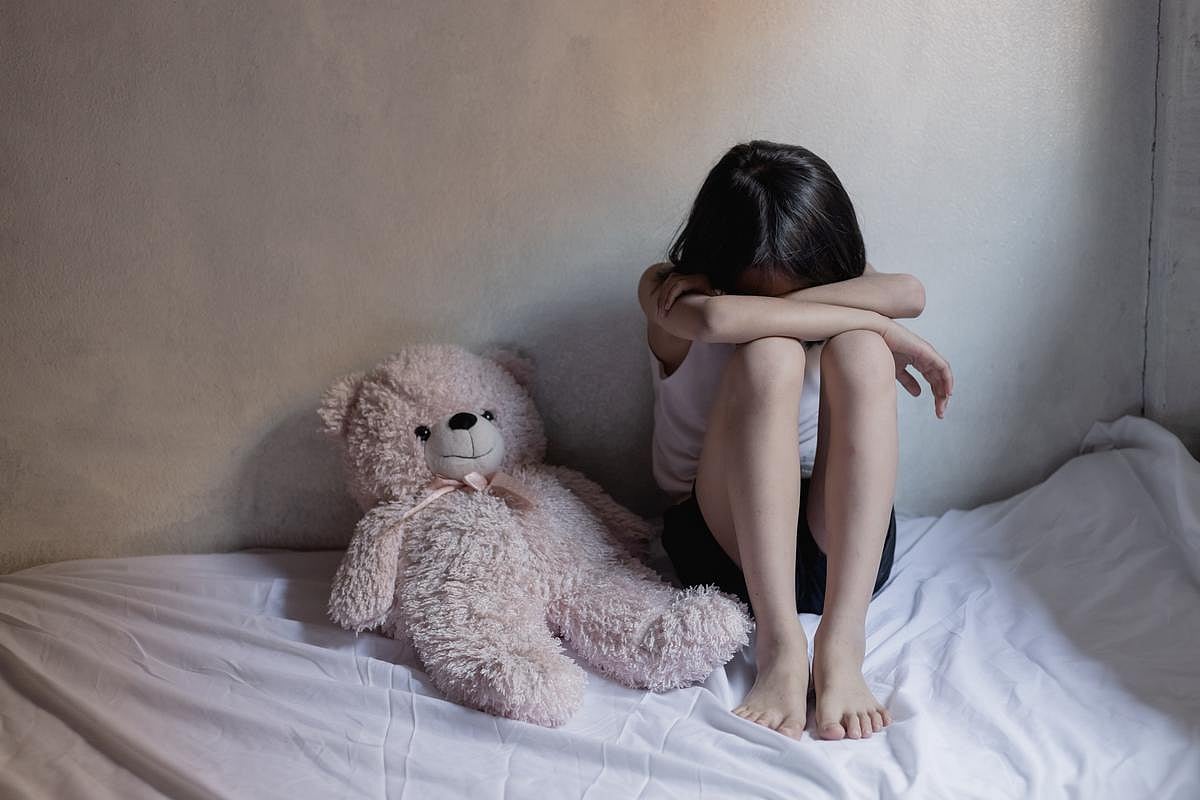
Children of depressed parents are more likely to develop depression themselves, and a new study suggests this risk might be tied to one specific symptom of depression.
It’s already known that depression in parents can affect how children’s brains respond to positive and negative feedback, researchers said.
That might be due to a depression symptom called anhedonia, or a loss of interest or pleasure in things, researchers write in the February 2026 issue of the Journal of Experimental Child Psychiatry.
“If parents are experiencing forms of depression where they’re not enjoying things and aren’t interested in things, that seems to be impacting how their kids are responding to what’s going on around them,” senior researcher Brandon Gibb, director of the Mood Disorders Institute at Binghamton University, said in a news release.
“They’re less reactive to positive things and negative things,” he continued. “It seems that parents’ experiences of anhedonia is the key feature of depression impacting how children’s brains are responding, at least in our study, rather than other common symptoms of depression.”
For the new study, researchers performed a lab experiment involving more than 200 parents and children ages 7 to 11.
The experiment was designed to see how parents’ anhedonic symptoms affect children’s brain responses to positive and negative feedback.
“The idea is that if you have this risk factor of being less interested or less engaged or finding things less enjoyable, maybe that’s reflected in how your brain responds to environmental feedback,” said lead researcher Alana Israel, a doctoral student at Binghamton University, a branch of the State University of New York.
“Children of parents who have higher levels of anhedonic depressive symptoms should show a reduced response while other depressive symptoms theoretically should not be as related to this specific brain response,” Israel explained in a news release.
In the experiment, children were presented with two doors and asked to guess the one with a prize behind it. If they chose the right door, they won money; if they chose wrong, they lost money.
Results showed that kids’ response to either winning or losing money was blunted if their parents had higher levels of anhedonic symptoms.
“What that tells us is that there is something specific about parents’ anhedonia that may impact children’s neural responses,” Israel said. “It further specifies a group of children who might be at heightened risk for loss of interest or pleasure and lack of engagement, which is a core feature of depression.”
Future research should investigate how family dynamics might change if parents with anhedonic symptoms receive treatment or start to feel better, the team said.
Researchers said it’s also important to examine whether children’s responses to other sorts of feedback, like social feedback from peers, are also affected by parents’ depression.
“There are researchers looking at interventions that are designed to increase positive mood, positive engagement and positive parent-child relationships,” Israel said. “It will be important to see if these findings can identify families who might be most likely to benefit from those types of interventions.”
More information
Yale Medicine has more on how parental depression affects a child.
SOURCE: Binghamton University, news release, Dec. 4, 2025
